About
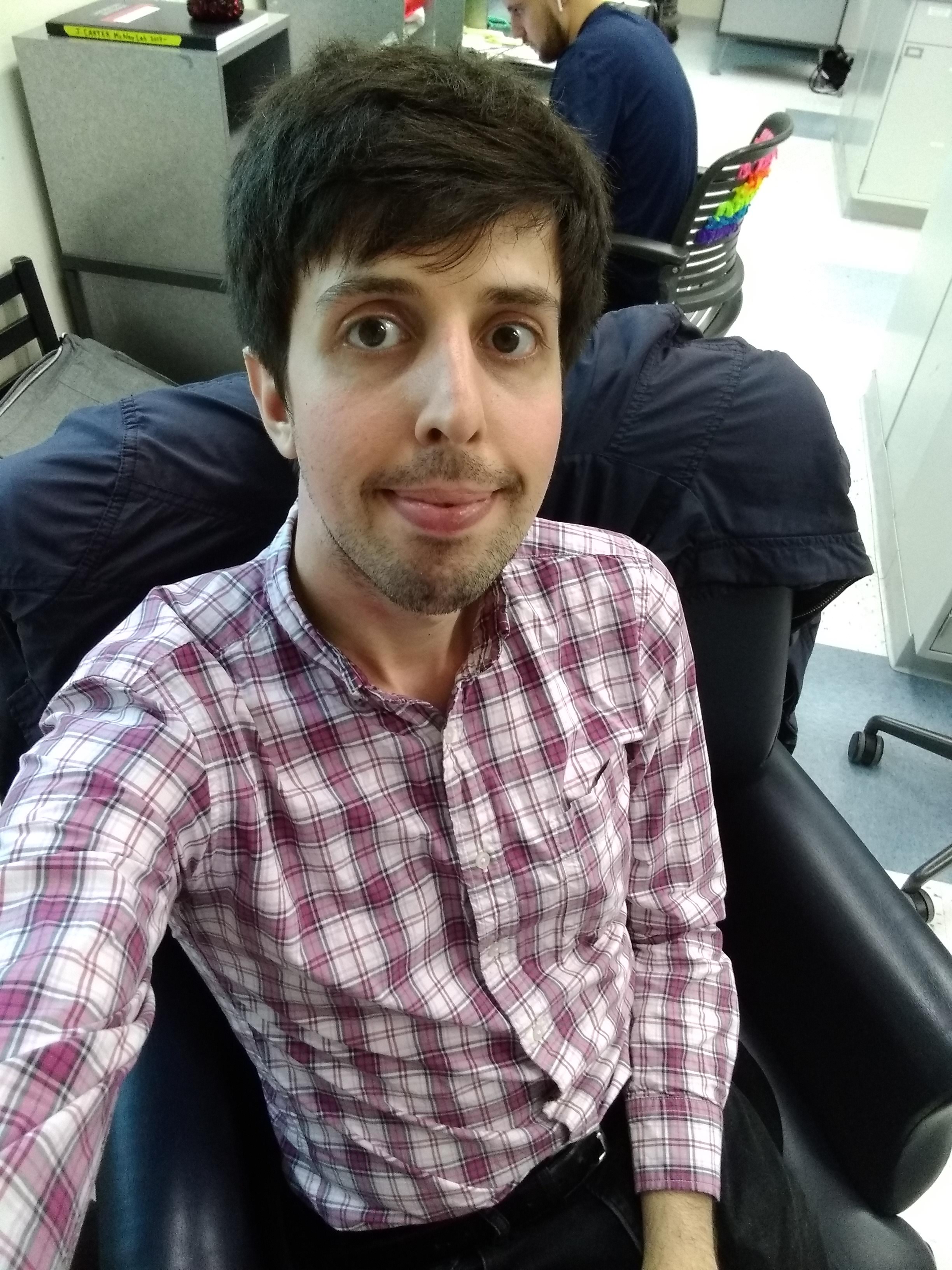 I'm a neuroscientist and quantitative researcher. I'm first author of a publication in CNS Neuroscience & Therapeutics and a contributing author in Cell, with published work spanning Alzheimer's therapeutics, whole-brain imaging, and applied machine learning. I use R and Python for reproducible analysis and evidence synthesis, I have strong bench technique, and I taught undergraduate statistics for six years.
I started early. I began doing neuroscience research in Richard Bodnar's lab at CUNY Queens College while I was still in high school, and I never really stopped. My fascination with how the brain produces the mind and behavior has widened into an equal interest in how research itself gets done: the technology, the statistical methods, the logistics, and the institutional culture that determines whether it works.
Cold Spring Harbor Laboratory
After college, I spent five years at Cold Spring Harbor Laboratory in Pavel Osten's lab, and it was there that my identity as a researcher started to take shape. I began as a research technician and worked my way up to lab manager, and I came away with four things that still drive me.
The first was real technical depth, especially in microscopy and rodent behavioral testing. Our group ran serial two-photon tomography to build brain-wide maps at single-cell resolution, work that taught me that technological progress and scientific progress go hand in hand.Serial two-photon tomography images a whole mouse brain by slicing and photographing it in one automated pass, at a resolution fine enough to count individual cells. Before it, brain-wide cell counts were largely guesswork. I handled the immunolabeling validation for our 2017 Cell paper mapping GABAergic interneurons across the whole mouse brain, and worked on characterizing the social behavior and neuroanatomy of the Cntnap2 knockout, a mouse model of autism.
The second was management and logistics. As lab manager I coordinated the animal colony under IACUC oversight, handled budgets and procurement, and kept a group of postdocs and technicians supplied, trained, and on schedule. (It was here I developed a passion for laboratory-animal welfare, and I remain convinced that enriched and well-treated animals make for rigorous and translationally relevant science.) More than anything, the role taught me that organization and logistics are essential to an effective lab.
The third was programming, which started as a way to automate tedious tasks and grew into an interest in computer systems and elegant software solutions.
The fourth was a taste for industry. CSHL gave me a close look at how academic labs and industry (biotech and pharma) research groups actually work, and I found I preferred the pace, focus, and applied orientation of industry-style research to the academic track -- a realization that has shaped every choice since.
University at Albany
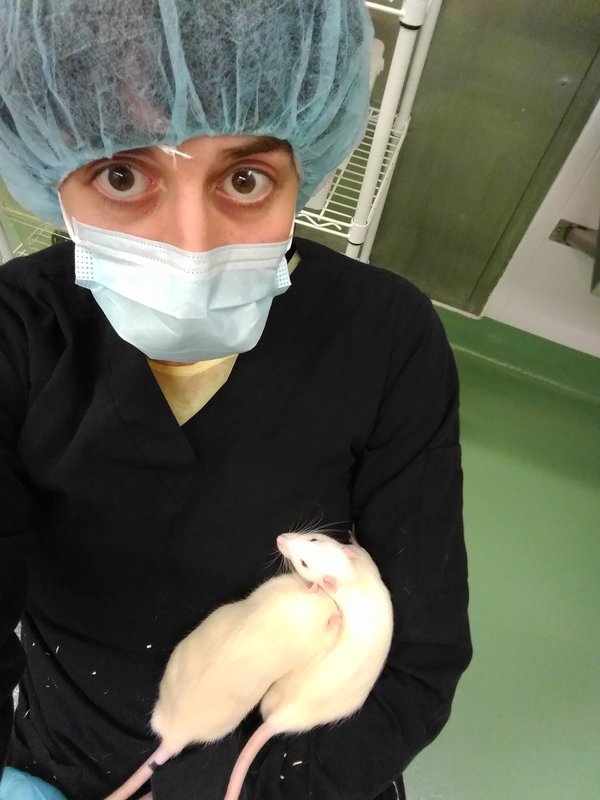 My time at SUNY Albany, with James Stellar as my adviser, was deliberately multidisciplinary, and the projects I took on were guided by a pragmatic, translationally-minded research agenda. On the bench, I studied the earliest stages of Alzheimer's disease in a rat model and tested whether IGF-2 delivered intranasally (a delivery route I chose specifically because it could plausibly translate to patients) could blunt the cognitive decline that normally follows. That work became a first-author publication in CNS Neuroscience & Therapeutics. I also got to work with a lot of talented undergraduates, and mentoring them became one of the most rewarding parts of the job.
Albany is also where I got serious about statistics -- and increasingly frustrated by how routinely it's misused in published research. I volunteered to teach statistics for psychology when no other graduate student wanted to, and I ended up teaching it for six years. Improving how the field uses statistics became a kind of "meta" project for me -- a way to make research better in aggregate rather than one experiment at a time. That's the same instinct that pushed my dissertation off the bench and into a meta-analysis of a translationally important question: do similar interventions (e.g. enrichment, drugs) produce similar cognitive effects in humans and lab rodents? My analysis showed that rodents gain roughly 2.5x more from environmental enrichment than people do in comparable studies.The likeliest reason is dull: standard lab housing is so bare next to an ordinary human life that "enrichment" mostly means relief from deprivation. The rodents simply have further to climb. That gives a concrete discount rate for anyone reading a rodent result and trying to guess what it means for humans.
What I'm working on now
I work on the Metascience Observatory, a project that estimates how reliable published research really is across different fields. My role is building its automated meta-analysis pipeline,The Observatory's aim is a running estimate of how much of a field's published literature would survive a careful replication -- field by field, rather than one headline study at a time. which turns findings scattered across published papers into clean, reusable datasets. It is the natural next step after a dissertation spent poking at exactly that question.
Alongside several writing projects and tutoring, I build software tools. Most of them are things I wished existed while I was doing research or teaching: Figure Extractor, which pulls the numbers back out of published charts; Meta-Reference Toolkit, which cleans and deduplicates reference libraries; Nimble, the lab-management tool I wanted at Cold Spring Harbor; and Active Reader, which gates PDF reading behind comprehension questions. Each is described in more detail alongside my research.
Teaching, tutoring & consulting
I still teach. I work primarily with undergraduates -- especially STEM students heading toward graduate or medical school -- who need a real research project and a strong letter of recommendation but aren't sure how to get there. A lot of what I teach is the stuff undergraduate STEM education tends to skip: the basics of programming, GitHub, data management, reference management, and the softer skills nobody assigns you like networking and negotiation. My Research Literacy guide grew straight out of this.
If that sounds like you, I'd like to help. I keep flexible pricing, and you can book time with me on Calendly or Clarity.fm. I also do more conventional tutoring for high school and undergraduate students, in person or online.